

Sgt. Die Wies
- sangfroidbooks

- Jul 4, 2019
- 7 min read
Updated: Jul 9, 2019

Instagram: @diewies
Facebook: Sgt. Die Wies
Twitter: @TashBGosh

Questions contributed in part by Frankie Foukette:
Introduce yourself with a brief description of who you are. Please be sure to include your location and pronouns. Taglines are also welcome.
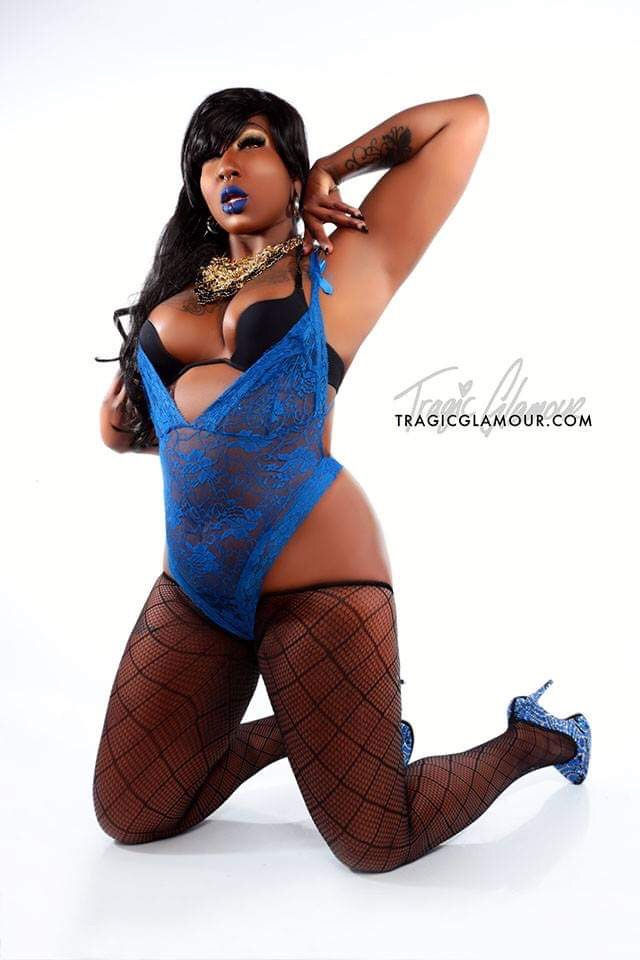
SDW: “This is Sergeant Die Wies, (that’s D.I.E.[space]W.I.E.S.)… I am known as a 6 ft. baby giraffe. I am a Performance Artist…specifically Burlesque [and] Drag [are] my forte. I’m from San Francisco…I’m a Bay Area child. My preferred pronouns are she/her.”
What influenced you to get into burlesque originally? Is this the same reason you are doing burlesque nowadays? Why or why not?
SDW: “I got into Burlesque originally because I was looking for the right avenue of femininity I wanted to be involved with because the way I grew up it was always really catty and I didn’t have a lot of awesome female influences around me. I…read about them in books and saw them onscreen but I only had very few friends…Now, I do it hopefully to light the way for other performers, other people who are inspired by my…I like to say gonzo style of Burlesque… because a lot of people don’t see bodies like mine or skin-tones like mine in places… all over the world. That’s my mission.”
What observations have you made in the demographics of burlesque performers, and what would you like to see change?
SDW: “Honestly, I’m really happy with the way things are moving but I wish they would just be a little more well-represented. Obviously more Black folks, more Queer, Trans, Nonbinary folks, would be really awesome…I say Black folks because I identify as a Black person but Brown people in general, I’ve seen some amazing Middle-Eastern and Indian women getting involved. I love that, especially… how high-touch that can be…that’s a big thing culturally for them… These female-presenting people are so great just to come out here and… display their bodies. I’ve been stalking this amazing… seems to be Indian woman on Instagram who is an amazing Pole Artist.”
In what ways do your performances/ productions forward or embody intersectional feminist thought and advocacy. Why is this important to you?
SDW: “… My whole purpose is to break the female form…and… push what is sexy and acceptable and also make it known that what people think is sexy is not the only factor in what sexy is… I am a sapiosexual, I find that the smarter somebody is the more attractive they become. I love highlighting that through things like Nerdlesque... This show specifically here at Jolene’s [in SF] is a really great place to be able to push all the boundaries and have those conversations and talk about all the things because not all the time is there a platform for you to do that.”
Are there any specific cultural and/or systemic issues that you address in your performances/productions?
SDW: “Absolutely…I like to address the things associated with tabooness in Black culture, and also in Queer culture… The thing about being magical people is you can talk about things, you can be those forward-thinking, envelope-pushing kind to be able to have conversations about shit that you… usually wouldn’t be able to with people you usually wouldn’t be talking to… The one thing the Burlesque community (and Drag community) does is bring… crazy amounts of people together from... [different] sectors…I love that because sometimes… I’ve made friendships with people I’ve never thought I’d have different conversations with because I was at a Burlesque show performing and the next thing I know ‘Ohh, you work for Facebook? Well. Nice to meet you too… That’s cool. I wish I’d known that before we got drunk together…uh-huh… No, you can’t touch my face, and no you cannot touch my hair.’” [Laughter emitted from everyone in the vicinity of the bathroom/changing-room where this interview is taking place.]
What do you hope your audiences take away from these performances?
SDW: “That vulnerability is such a powerful tool… I am super shy… you’d never get that outside of Burlesque but I am a super shy-ass person… I find that with my character Sergeant Die Wies, or Tyson Check-In [my male Drag King persona,] or Ctrl-Alt-V [my Lady Drag persona, people call me Kunt for short] or my clown personas… I come from places that I usually shy away from and [now] I can connect with people on these levels… I want people to know that vulnerability is not a weakness… Oftentimes with my art, I will approach situations… When I get to address these issues with people... usually what they do or portray about Black people, about Feminists, about women… fat girls… whenever I come across situations like this and it’s hurtful to me I try to come from a place of love and understanding and patience, and portray that through my performance… Instead of coming from, ‘Burn everything to the ground!’ call-out culture, have a face-to-face conversation, come from a place of vulnerability, love, understanding, and patience. I definitely want to a punch a hole in the wall when I fuck with people sometimes but… I just wish that everybody is kind to each other and realizes that love will get us so much further than hating each other…Call-out culture is not safe, and we have a lot of work to do.”

What are some unexpected reactions you received from audience members, and how did you deal with those interactions?
SDW: “The strangest reaction I’ve ever had is people crying…I was performing in Ithaca, New York, and I had done my Uptown Butt number…an act where I do my signature truffle-shuffle…I shake my, what some people would call ‘f.u.p.a.’, ‘my spare-tire’, [or] ‘my doughnut’ [laughs] and I would shake my crispy-cream at them and they would not be happy… but this particular woman, she came up to me, and she was crying. I thought I had offended her, and she was like ‘I’ve never seen anybody with a body-type like mine…I’m so grateful that you have the confidence because I don’t,’ and I’m like ‘you do, though! You do…’ We hug it out, and I gave her a photo to remember me by, and was like ‘Please, think of this every time you feel like you want to crawl back into your hole, or… back into your shell, wherever you are hiding, and remember, be courageous, because there are so many people who might be looking at you for the same courage too.’… I feel like a fucking Girl Scout.” [Room bursts with laughter from burlesquers.]… Vulnerability… took me a long time to learn. Also realize that those same people who are hurting you are also hurting, they just don’t know how to process it…”
Any upcoming performances or events you are doing that relate to feminism and intersectionality?
SDW: “Yeah! Here! I’m at Jolene’s every Saturday and Sunday for Brunch…from 1 to 3. Sometimes, depending on who is here, they have different hosts that I like to put together [that might] start earlier, but usually it’s 1 to 3. Go to the jolenessft.com website and also follow my Instagram, my Facebook, for different events that are happening… we have a lot of great shows with folks like Vera [Hannush] over in--" [Vera, who is also in the bathroom, chimes in]:
VH: “Oakland/Berkeley with the Rebel Kings!”
SDW: “My show is called Muff Dive, my production is called Womanopoly SF…I’m constantly trying to do new things inside the Castro since the Castro is lacking so much feminine energy and presence… I’m not Lesbian, I’m Bisexual, so I want to put the ‘B’ in LGBT, but also put all my Lesbian and Queer friends [who] are female-presenting or identifying there to change the format…and make it feel welcoming and safe… We also want to spread out to other areas in the city…I’m also doing great events over at the Midway [Dogpatch] this Friday June 28th, we’re going to be doing a huge Queer, Lesbian, Trans, Nonbinary event with Club Chai,Grumpy Lil’ Shit (my old roommate,) and a couple other really great DJs.”
What do you think the future of burlesque, in regards to intersectional feminism, will look like five years from now?
SDW: “I hope that [Burlesque] is still going, I hope we are getting paid what we deserve because we do a lot of fucking work and a lot of people don’t recognize how much work goes into looking this sparkly. People are like ‘oh, cheap costumes with rhinestones,’ but there’s a lot of thought that goes into it [in terms of] the messages that we are trying to put through our costuming and our art performances… I hope that we are past the hurdles that we are struggling with now and are onto the new up-and-up… Bringing in new fresh meat, fresh blood, fresh everything, and [I hope] that we are learning how to love better…I hope that there will be more venues, better venues, that understand and pay us. We need dough, we want to keep growing, bring more people in and buy better costumes… Give us fucking dough! That’s the problem I feel with right now is that people… don’t want to pay for Art. People want to watch Netflix, watch Hulu, and all that other shit, but you can’t get real live performance, even if you are watching it live-stream, you can’t get that energy, that feel that your body is doing when you are face-to-face… Your body is calibrating, your eyes are adjusting, your pheromones are exchanging, you are shaking hands, energy is happening and you cannot get that through a screen. You have to go and see live art, live performance because sooner or later...it’s already happening! They are cutting the orchestras out of theaters. Now it’s recording… A culture without art and music and performance is a poor culture… I go to Europe all the time mostly because they pay me what I’m worth out there, they treat me well and they understand the importance of having art-involvement, of people… having interactions inside of art-environments… but America is getting worse and worse by the second…”


Comments